
22 questions
Straight answers about earthwork
Sorted into seven topics. If your question is not here, calling is faster than searching — we would rather answer it directly.
Getting started
Call (510) 277-6570 or email info@brservicesllc.online with your address, what you need done, and any photos you have. We schedule a site visit, usually within a few days, and follow it with a written estimate. Site visits are free and carry no obligation.
The dimensions of what is coming out or going in, photos of the work area and the access route, and any plan set or geotechnical report you already have. For concrete, the thickness matters. For grading, tell us where water currently collects. For excavation, the plan elevations settle most questions.
Small jobs — a container drop, a load of gravel, a short fence line of post holes — are often the same week. Demolition and excavation depend on permits and inspections more than on our calendar, and we will give you a realistic start window rather than an optimistic one.
Pricing and payment
No. The site visit and written estimate are free. We would rather spend half an hour measuring than produce a number over the phone that has to be corrected once we see the property.
Most work is quoted as a fixed price for a defined scope, which puts the risk of an efficient day on us rather than on you. Some open-ended work — exploratory digging, unknown subsurface conditions — is better priced by the hour, and we will say so plainly when that is the case.
Only conditions nobody could see beforehand: rock at a depth the report did not predict, buried concrete or debris, groundwater, or a utility that was never marked. When we find one, you get a photo, an explanation, and a price before any additional work happens.
Permits and inspections
Demolition of a structure almost always requires one. Grading may require one depending on volume, area, and slope. Pool removal generally does. Container placement on a public street usually needs an encroachment permit. Requirements differ between San Pablo, Richmond, Berkeley, and the county, and we tell you which apply at your address.
Property owners typically pull residential permits themselves or through their general contractor, since the permit attaches to the property. We give you the exact list of what to apply for and coordinate directly with the inspector once work is underway.
If a failure is on our scope — a footing bottom out of tolerance, a trench short of required cover — we correct it at our cost and get it reinspected. That is the point of shooting grade continuously rather than checking once at the end.
Site conditions and safety
We place the USA North 811 ticket and verify marks on site, including hand potholing where a dig comes close to a marked service. You should tell us about private lines — irrigation, landscape lighting, septic, a pool feed, a line to a detached shop — because 811 only locates member utilities.
Work stops in the affected area and we do not disturb suspect material. You get a written note of what was found and where, and we can refer certified testing and abatement contractors. Structures built before the late 1970s should be assumed suspect until tested.
Boundaries, fences, trees, and neighboring structures are identified and protected before work starts. On tight lots we speak to the neighbor ourselves when access or protection needs their cooperation, and we would rather have that conversation before the machine arrives than after.
We assess it before mobilizing. Track machines spread load better than wheels, plywood and mats protect travel routes, and where residential concrete is genuinely too thin we stage from the street instead. Any real risk gets raised before work, not explained afterward.
Debris and disposal
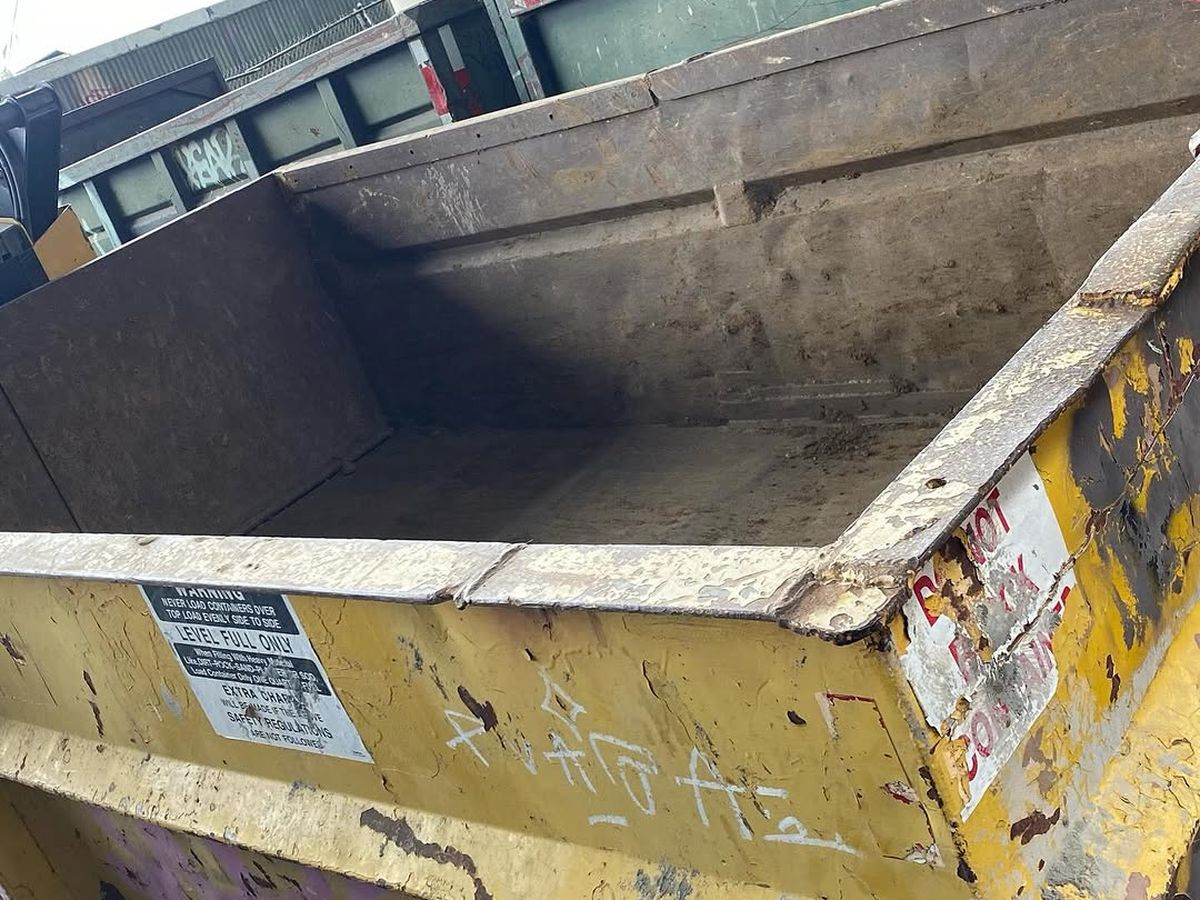
Yes, unless you have specifically asked to keep material on site. Loading, hauling, and disposal are part of our quoted scope, which is one of the practical advantages of a contractor who owns the trucks.
Where facilities accept it, yes. Clean concrete goes for crushing into aggregate base, scrap metal and reinforcement go to metal recycling, and asphalt goes to a pavement recycler. This is why we sort on site — recycling rates are lower than general waste rates, so it shows up on your invoice.
Absolutely, and it sometimes saves real money. Clean soil can be spread and compacted in a low area of your property, and broken concrete is occasionally reused as fill or rip-rap where the jurisdiction permits. We will tell you honestly when reuse works and when it creates a problem later.
Scheduling and weather
Some work continues in light rain and some cannot. Wet clay will not compact, saturated trench walls are considerably more dangerous, and grading a soaked surface destroys the finish. We would rather lose a day than deliver work that has to be redone, and we keep you informed as the forecast changes.
Monday through Saturday, 8:00 AM to 6:00 PM. Local noise ordinances further restrict when demolition and heavy equipment can operate in residential neighborhoods, and we work inside those limits without needing to be reminded.
A container drop or gravel delivery is a single visit. Garage demolition runs one to two days. A partial pool removal takes a few days. Foundation excavation depends on size and soil. Grading runs one day to a week. Your estimate includes a realistic day count and the conditions that could extend it.
Working with contractors
Frequently. Earthwork is the phase most GCs subcontract, and we are used to working from a plan set on someone else's schedule and inspection calendar. Certificates of insurance, W-9s, and conditional and unconditional lien releases are routine parts of our paperwork.
Yes, and on anything involving shoring, piers, retaining structures, or hillside work we want that contact early. Encountering a condition that contradicts the geotechnical report is the moment an engineer's input is worth most, and we raise it immediately rather than improvising a fix.
We handle light commercial work — tenant improvement demolition, slab removal, parking area grading, and site clearing on infill parcels. Large industrial demolition is outside our scope, and we will tell you when a project needs a specialist rather than taking it on.
Next step
Still not sure what your project needs?
Describe it in a phone call or an email with photos. We will tell you the scope, the likely permits, and a realistic day count.