
Utilities and foundations
Trenching & Piers in San Pablo, CA
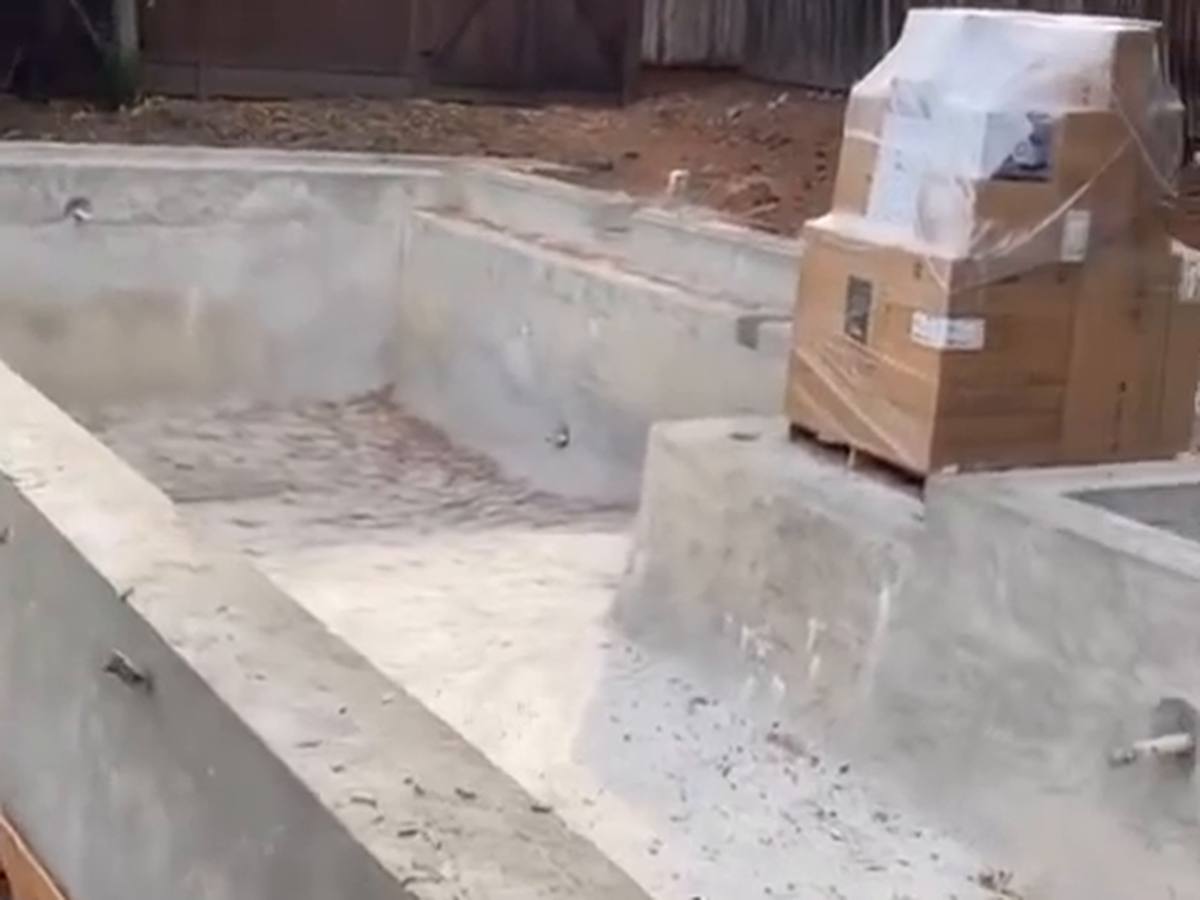
Utility and drainage trenches cut to grade, and drilled pier holes for foundations, decks, and retaining walls.
Overview
What trenching & piers involves on a real property
Trenching and pier drilling are the two operations that put your project underground, and both are unforgiving of approximation. A drain trench with a flat or backward slope holds water instead of moving it. A pier hole drilled shallow of its specified depth does not reach the bearing stratum it was designed for. Both mistakes are buried before anyone can see them, which is why we shoot grade and log depth as we go.
Our trenching covers electrical and sub-panel feeds, water and irrigation mains, gas lines to detached structures, sewer and sanitary laterals, French drains and area drain networks, downspout tightlines, low-voltage and communication conduit, and footing trenches. Widths and depths follow the code cover requirement for the utility in question rather than a single default, because a power conduit, a water service, and a gravity drain each want something different.
Drainage trenching gets its own attention because slope is the whole product. A gravity line needs continuous fall from inlet to outlet, and on the flatter parcels around Richmond and San Pablo finding that fall requires shooting elevations before committing to a route. We check the outlet first. There is no point cutting an elegant trench toward a discharge point that sits higher than the inlet, and that error is more common than it should be.
Pier drilling supports foundations, deck and addition footings, retaining walls, carports, and the underpinning of settled structures. Diameter and depth come from your structural or geotechnical plan, and the holes are drilled plumb with clean sidewalls so the specified concrete cover around the reinforcement cage is actually achieved. We log the depth reached at each pier and note the material at the bottom, which is the record your engineer or inspector will ask for.
Protection and restoration finish both operations. Open trenches are plated, fenced, or backfilled before the crew leaves for the day. Backfill goes in lifts with the required bedding and sand surround for the utility, warning tape at the specified height, and compaction that prevents the settlement trough that otherwise appears across a lawn or driveway the following winter.
What you get
Six things this service is built around
Drainage slope verified by instrument
Elevations are shot at the inlet and outlet before the route is cut, so a gravity line actually falls the whole way.
Cover depth by utility type
Electrical, water, gas, sewer, and low-voltage each get the depth and bedding their code requirement specifies, not a generic trench.
Pier depths logged
Each pier's depth and bottom material is recorded, which is the documentation your engineer and inspector will want to see.
Trench protection every night
Open cuts are plated, fenced, or closed before we leave, because an unsecured trench on a residential property is a liability nobody needs.
Backfill compacted in lifts
Proper bedding, surround, warning tape, and layered compaction prevent the settlement line that otherwise appears across the yard.
Coordinated with your trades
We sequence the cut so the electrician, plumber, or drainage installer can drop in and inspection happens before backfill.
Scope
What is included
Anything outside this list is quoted separately and approved before it happens.
Planning and locating
- Route and invert elevation survey
- USA North 811 ticket and verification
- Hand potholing at crossings
- Cover depth confirmed by utility type
Trenching
- Electrical, water, gas, and sewer trenches
- French drain and area drain runs
- Footing and grade beam trenches
- Continuous fall on all gravity lines
Pier drilling
- Diameter and depth per structural plan
- Plumb holes with clean sidewalls
- Depth and bearing material logged
- Casing where soil will not stand
Closeout
- Plating or fencing on open cuts
- Bedding, surround, and warning tape
- Compacted lift backfill
- Surface restored to original grade
Process
How the work runs, step by step
Survey the route
We shoot elevations along the proposed line, confirm the outlet is genuinely lower than the inlet, and adjust the route where the fall is not there.
Locate and pothole
The 811 ticket is placed, marks are verified, and every crossing of a marked service is exposed by hand before the machine passes over it.
Cut to grade
The trench is excavated to the required width and cover depth with continuous slope on gravity lines, and spoil is set back from the edge.
Drill the piers
Pier holes are augered to the plan diameter and depth, checked for plumb, cleaned at the bottom, and logged individually.
Inspect and backfill
Your trade installs and the inspection happens, then bedding, surround, tape, and compacted lifts go back in and the surface is restored.
Why hire a contractor
Where doing it yourself usually costs more
Trench collapse is the reason this work is regulated. Cal/OSHA requires a protective system in any trench five feet deep or greater, and the sand and clay layers common in this region can fail with no warning at all. Soil is heavy enough that a partial collapse is life-threatening within seconds. A rented trencher does not include a competent person to classify the soil and select the protection, and that judgment is the actual service being purchased.
Accuracy is the second half. Drainage that does not fall continuously will hold water and eventually route it toward the nearest foundation. Utility trenches cut shallower than the required cover fail inspection and have to be reopened. Pier holes short of their designed depth do not reach the bearing layer the engineer specified, and correcting that after concrete is placed means demolishing the pier. None of these errors are visible after backfill, which is precisely why the record matters.
Restoration is where homeowners feel the difference months later. Backfill dumped in and walked over settles, and a settlement trough across a lawn, a driveway, or a patio is both unsightly and a new drainage path pointed wherever the low line runs. Bedding the utility, compacting in lifts, and restoring grade properly is unglamorous work with a very long payback.
Real projects
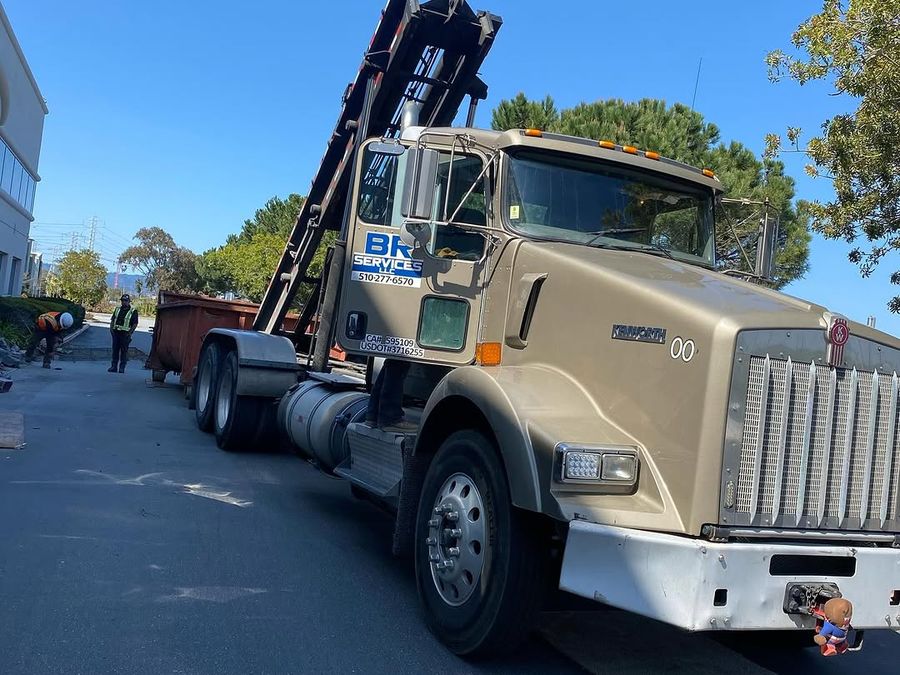
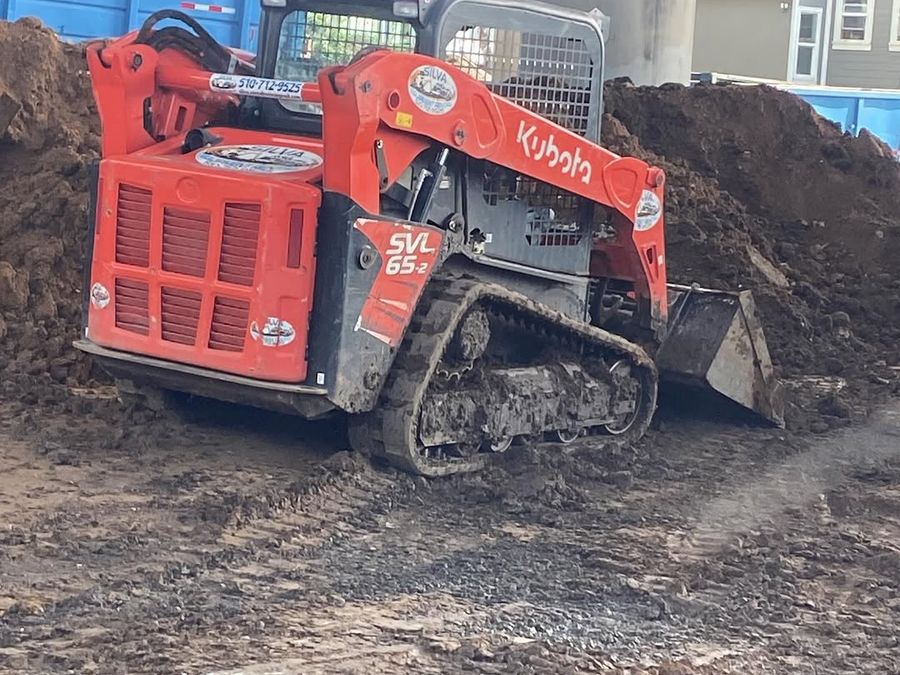
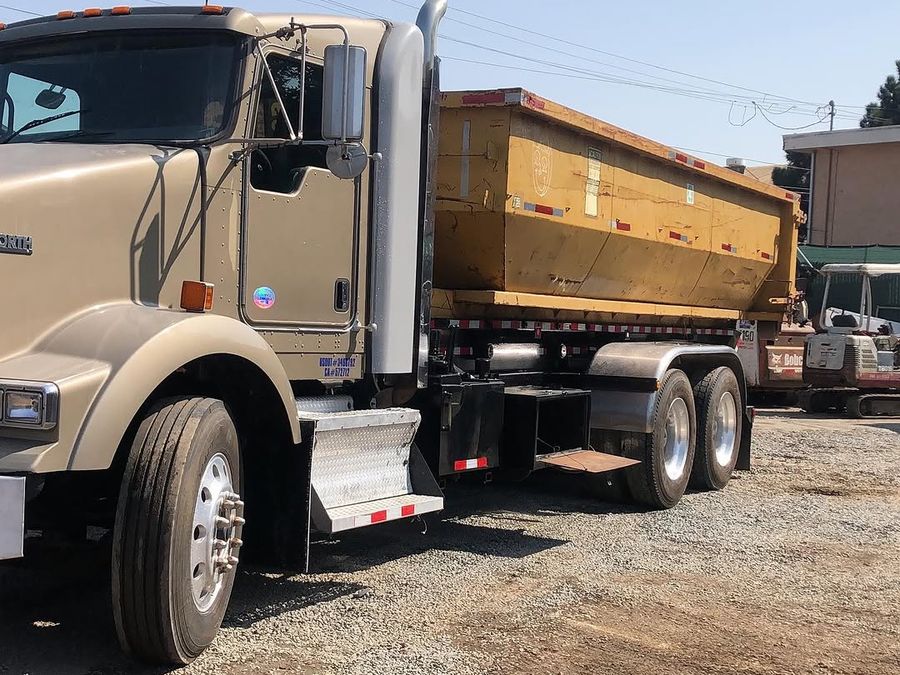
Trenching & Piers on site
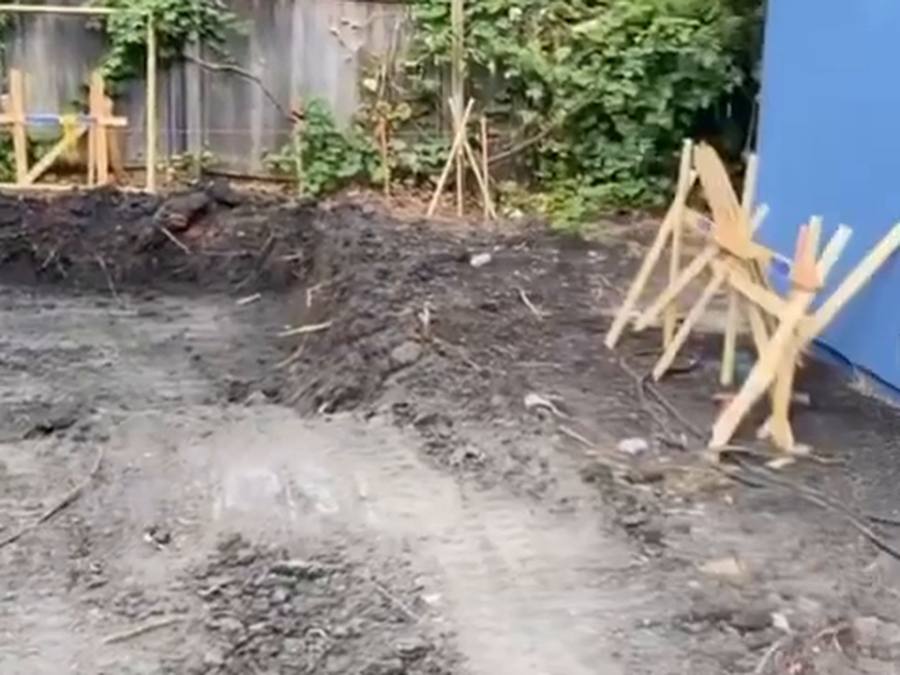
The four stages a trenching & piers job moves through on an East Bay property, in order.
Questions
Seven answers specific to trenching & piers
It depends on the utility. Electrical conduit, water service, gas, sewer, and low-voltage each carry their own code cover requirement, and gravity lines are governed by the slope they need rather than a fixed depth. We confirm the requirement for what you are installing before we cut anything.
A common target is around a quarter inch of fall per foot, with the real requirement set by pipe size and type. What matters more is that the fall is continuous — a line that is flat in the middle will collect sediment there and eventually block, even when the overall inlet-to-outlet difference looks adequate.
A pier is a drilled, concrete-filled shaft that carries load down to stable soil. They are specified when surface soils cannot support a structure, on slopes, for deck and addition footings, behind retaining walls, and for underpinning settled foundations. The diameter and depth come from your engineer, not from a rule of thumb.
Largely, yes. A narrow cut with the sod removed in strips, set aside, and replaced after compacted backfill recovers well within a season. We keep machine traffic on a defined route, use mats on soft ground, and restore grade so there is no line for water to follow.
Your city inspector, generally, and often the utility as well. Backfilling before an inspection is one of the more expensive mistakes on a small project, because the trench has to be reopened. We schedule around the inspection and will not close a cut that has not been signed off.
By avoiding it where possible. Cutting through a root zone can destabilize a mature tree and eventually kill it. Where a route must pass close, we shift alignment outside the critical root zone, hand dig around significant roots, or discuss boring under the zone instead of cutting through it.
We trench, bed, and backfill, and coordinate closely with the licensed electrician or plumber making the connections. On drainage work we can supply and install the full system — pipe, fabric, drain rock, inlets, and outlet — since gravity drainage sits squarely inside earthwork rather than in a licensed trade.
Related work
Services that usually go with this one
Coverage
Where we work
Trenching & Piers is available throughout our 20-mile radius. Access and haul distance are what move the price between addresses, not the city name.
Next step
Ready to price your trenching & piers job?
Send dimensions and a couple of photos, or book a free site visit. You will get a fixed number and the assumptions behind it.