
Debris · 6 min read
Picking a Dumpster Size That Does Not Come Back to Bite You
The mistake is not ordering a container that is too small. It is ordering one that is too big for concrete and hitting the weight limit half full.
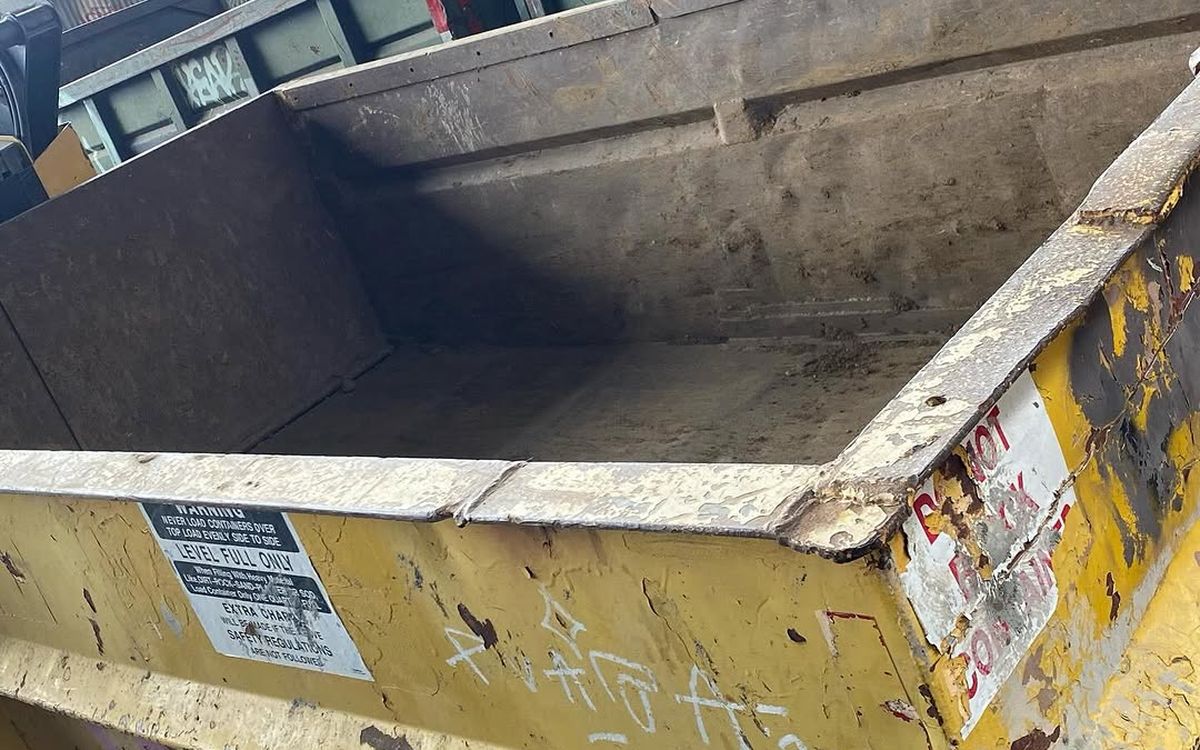
Container sizing seems like a volume problem and is really a weight problem. Every roll-off has two limits: how much space is inside it, and how much mass the truck can legally carry away. For light debris the volume limit arrives first. For heavy debris the weight limit arrives first, often with the box looking barely half used. Nearly every unexpected charge on a dumpster invoice comes from confusing those two situations.
Sort your debris into light or heavy before anything else
This is the single decision that determines size. Light debris fills space without accumulating much mass: framing lumber, drywall, cabinetry, furniture, insulation, packaging, general household cleanout. Heavy debris is dense enough to reach a road weight limit quickly: concrete, brick, block, tile, mortar, stone, soil, sod, and asphalt shingles.
Roofing surprises people most. A tear-off looks like a manageable pile of thin material, and asphalt shingles are dense enough that a couple of layers off an average roof will reach the weight ceiling of a small container on their own. Treat shingles as heavy debris every time.
How to think about size by project
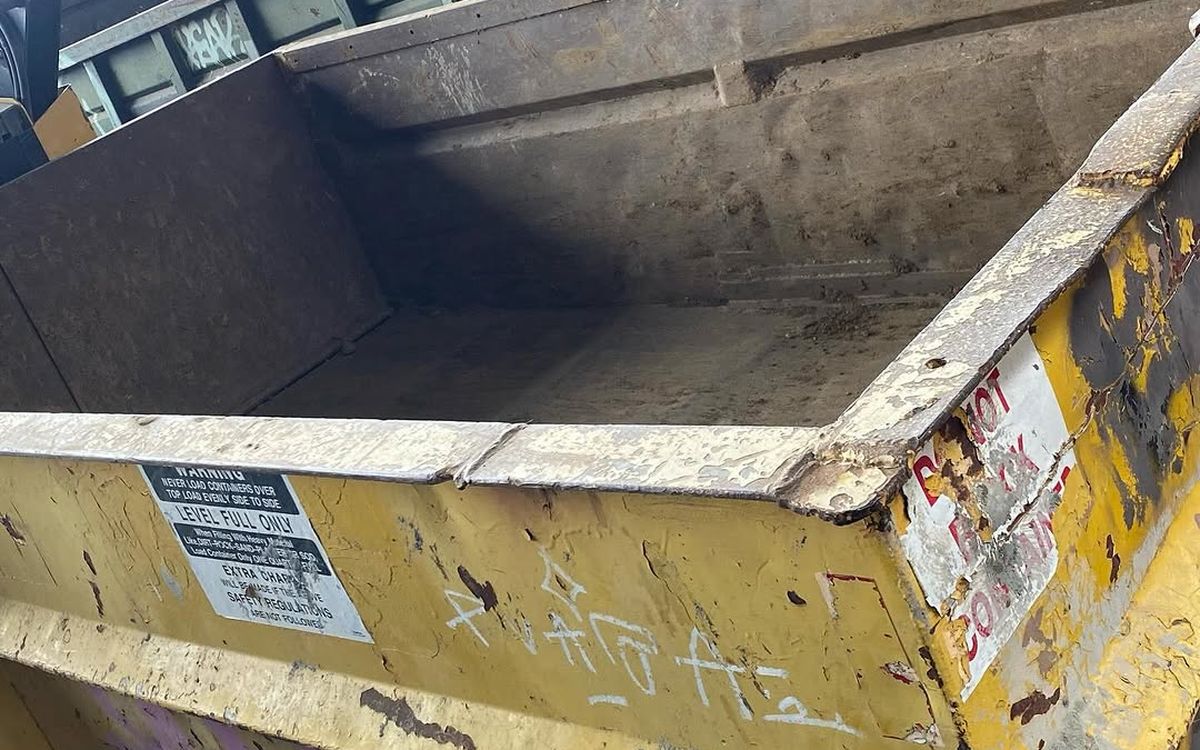
Rather than quoting yardages that vary between haulers, it is more useful to think in project terms. A single-room remodel — one bathroom, a small kitchen, a bedroom — generates less debris than most people expect, and a small container is normally right. A whole-floor remodel, a full house cleanout, or a framing and roofing package needs a large one.
Heavy material inverts the logic. A patio removal, a driveway breakout, an excavation spoil pile, or a roof tear-off should go in the smallest container the hauler offers, and be swapped as many times as the volume requires. Two small boxes fully loaded to their weight limit will move more material, more cheaply and more safely, than one large box that cannot be legally lifted.
Never mix heavy and light in the same box
Clean concrete, brick, and block go to a recycling facility at a lower tipping rate than mixed construction waste. Toss a few sheets of drywall and some lumber into that container and the whole load is reclassified as general debris at the higher rate. The sorting effort is minutes; the cost difference is real. Same logic applies to clean soil, and to asphalt, both of which have their own recycling streams.
Where the container actually goes
Placement is the second most common source of trouble, and it is entirely preventable with a five-minute walk before booking. A delivery truck needs roughly sixty feet of straight approach, about twelve feet of width, and overhead clearance up to around twenty-two feet to raise the bed and roll the box off. Low branches, service drops, and parked cars are the usual obstacles.
- Driveway placement avoids street permits and keeps the parking lane free
- Street placement usually requires an encroachment permit and may have a day limit
- Boards or mats under the rails protect concrete, asphalt, pavers, and stamped surfaces
- Position the loading side toward the work — walking debris around a container costs hours over a week
- Clear the approach on the morning of delivery, including moving your own vehicles
Cities across this region regulate street placement differently, and some limit consecutive days in a parking lane. If a driveway drop is physically possible, it is almost always the simpler answer.
Loading technique that keeps you under the limit
How a container is loaded changes how much fits and whether it can be hauled. Break down bulky items rather than dropping them in whole — a dismantled cabinet run occupies a fraction of the space of an intact one. Place flat material flat. Load heavy pieces low and distribute them across the floor rather than piling them at one end, because an unbalanced load is harder to lift safely.
And respect the fill line. A container loaded above the rails cannot be legally tarped or transported, and the crew will either level it on site or refuse the pull. That is a wasted trip, and typically a charge.

What cannot go in, under any circumstances
- Liquids of any kind — paint, solvents, oil, fuel, pool chemicals
- Batteries, tires, and propane or pressurized tanks
- Appliances containing refrigerant, unless the refrigerant has been certified as recovered
- Asbestos-containing material — this requires a licensed abatement contractor and a separate disposal stream
- Electronics and fluorescent tubes in most jurisdictions
The consequence of loading a prohibited item is not a warning. It is a rejected load at the facility gate, a return trip, and a fee. Ask before you throw anything questionable in — the phone call is free.
The questions to ask before you book
A straightforward hauler will answer all of these without hesitation, and the answers let you compare quotes that otherwise look identical.
- What tonnage is included, and what is the rate per ton over it?
- How many rental days are included, and what does an extension cost?
- What is the delivery and pickup charge, and is it inside the quoted price?
- Does my address need a street permit for this placement?
- Can I get weight tickets, if my permit requires diversion documentation?
A quote that covers the container, the tonnage, the days, and the haul in one number is easy to evaluate. A quote that is only a daily rate with everything else variable is not really a quote yet.
Questions we get on this topic
Yes, in a small container only, and it must be clean soil with no debris mixed in. Soil is dense enough to reach the road weight limit at a fraction of the container's volume, and some facilities will not accept mixed soil at all.
The load cannot be legally hauled. Either material comes off on site before pickup, or the truck leaves without it and returns later. Both outcomes usually carry a charge, which is why the fill line is worth respecting.
For anything above a closet-sized project, no. Gate fees, fuel, hours of hand loading, and the wear on an overloaded half-ton add up quickly — and every trip is a trip your crew is not working.
Services related to this article
Keep reading
Other field notes
Demolition Permits in the East Bay: What to Settle Before the Machine Arrives
A teardown rarely stalls because of the machine. It stalls because a utility disconnect was requested three weeks too late. Here is the sequence that works.
Read the article
Partial or Full Pool Removal: How to Choose Without Regretting It
Partial removal costs less and is often the right call. It also permanently changes what you can build there. The choice deserves ten minutes of thought.
Read the article
Why Your Crawl Space Is Wet: Grading, Slope, and the Six-Inch Rule
Water in a crawl space almost never originates in the crawl space. It arrives because the ground outside is pointed at your house.
Read the articleNext step
Have a project this article applies to?
We will look at it in person, tell you what the situation actually needs, and put a fixed number in writing.