
Drainage · 7 min read
Why Your Crawl Space Is Wet: Grading, Slope, and the Six-Inch Rule
Water in a crawl space almost never originates in the crawl space. It arrives because the ground outside is pointed at your house.
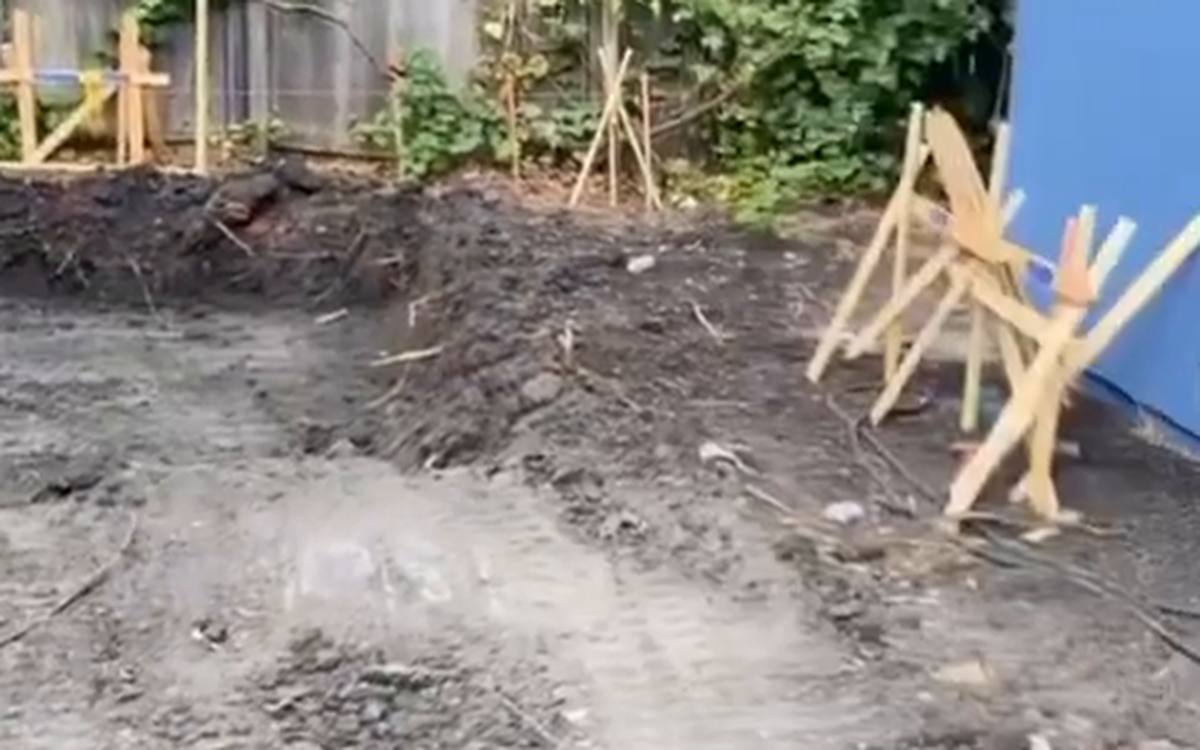
When a homeowner calls about a wet crawl space, standing water beside the foundation, a stem wall that is flaking, or a lawn that turns to mud every December, the cause is outside the house about nine times out of ten. Water arrived at the foundation because the ground around it directs water toward the foundation. Everything else — the sump pump, the vapor barrier, the sealant — manages the consequence.
Grading is the least glamorous repair available and frequently the most effective one. It is worth understanding how it works before spending money on anything that happens indoors.
The rule, and what it means in practice
The widely used target is roughly six inches of fall within the first ten feet measured out from the foundation — about a five percent slope. Beyond that first ten feet, a gentler continuous slope toward an outlet is enough. The purpose of the steeper zone near the wall is to move rainfall away before it can soak down alongside the footing.
Two things about that rule matter more than the number. First, ground that appears to slope away from a house very often does not, and the only way to know is to measure. A laser level or a builder's level across a yard routinely reveals that what looks like a gentle fall is actually two inches of rise. Second, the slope has to be continuous. A yard that falls away from the house for eight feet and then rises into a berm, a raised bed, or a neighbor's higher grade has simply built a basin against the building.

How grading goes wrong over time
Very few houses were built with the ground pointed at them. Grade degrades, and it does so through a handful of predictable mechanisms.
- Backfill around a new foundation settles for years, producing a trough right against the wall
- Landscape beds get built up with successive layers of soil, bark, and amendment until they sit above the surrounding grade
- Hardscape gets added at the wrong elevation — a patio, walkway, or driveway that dams runoff instead of shedding it
- Downspouts discharge at the base of the wall, delivering an entire roof plane to one spot
- Adjacent construction raises a neighbor's grade, changing where their runoff goes
- Irrigation runs long enough to saturate soil that then cannot absorb rainfall
Downspouts deserve their own paragraph
A roof is a highly efficient water collection device. A single downspout on a moderate house can deliver hundreds of gallons during one storm, and if it empties at the foundation, no amount of surface grading will keep up. Extending discharge well away from the building, or tightlining it underground to a controlled outlet, is often the cheapest single improvement available and is always worth doing before or alongside regrading.
Why interior solutions treat the symptom
Interior drainage, sump pumps, and vapor barriers all have legitimate uses, and in some situations — high groundwater, a hillside lot with subsurface flow — they are genuinely necessary. But when the cause is surface water directed at the building, interior work means water still arrives at the foundation, still saturates the soil beside the footing, and is then pumped back out. The foundation keeps getting wet. The pump becomes a permanent dependency with a failure mode.
Where soil around here is expansive clay — much of Richmond, San Pablo, El Cerrito, and the Contra Costa hills — there is a further reason to control moisture outside. Expansive clay changes volume with moisture content, and repeated wetting and drying beside a footing produces movement that shows up as cracks in stem walls, slabs, and interior finishes. Keeping water away from the perimeter is foundation maintenance, not landscaping.
What a real grading fix involves
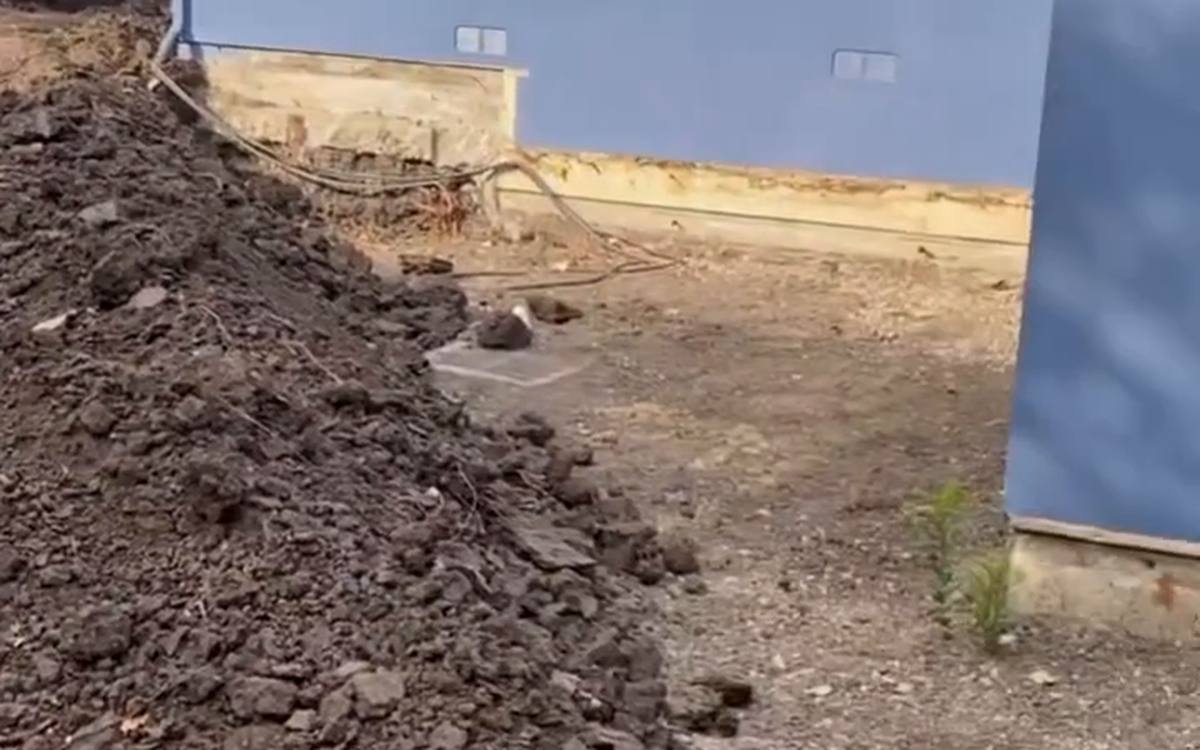
It starts with measurement, not with a machine. Existing elevations are shot across the area, high and low points are mapped, and — critically — the outlet is identified. Every low point has to connect to somewhere water is permitted to go: a street gutter, an approved storm connection, a lower area of the property, or a drainage system leading to one.
This is where amateur grading most often fails. Moving a puddle from one part of a yard to another is not drainage. And in California you may not concentrate runoff and discharge it onto neighboring property, which means the neighbor's yard is not an outlet even when it is conveniently downhill. Solving your problem by creating theirs converts an engineering issue into a legal one.
Cut, fill, or convey
With elevations known, the fix takes one of three forms. Cutting removes soil to create fall where there is room to lower the surface. Filling raises a low area, which requires imported or relocated material keyed into existing ground and compacted in lifts. Conveying — a swale, an area drain, a French drain, a tightline — carries water along a defined path when there is not enough elevation difference to solve it with surface shape alone. Most real projects use two of the three.
Compaction is what makes it last
Loose soil pushed into a pleasing contour will settle back toward its original shape within a couple of wet winters, and the problem returns. Fill has to go in controlled lifts, each compacted, and it has to be keyed into the existing ground rather than laid on top of it — otherwise the interface becomes a plane the fill can slide along once saturated. On slopes this is not a durability concern but a stability one.
The finished surface then needs protection. Bare graded soil erodes in the first storm, so seed, straw, matting, mulch, or hardscape follows quickly, and silt protection stays in place until the surface is stable.
What to check yourself this week
- Walk the perimeter during rain, not after — you will see where water actually goes
- Look at where every downspout discharges, and how far from the wall
- Check whether landscape beds and hardscape sit above or below adjacent grade
- Note any low spot that holds water more than a day after a storm
- Look for a soil line or staining on the stem wall, which marks where water has been standing
Those five observations tell a grading contractor more than a description of the symptom does, and they cost nothing but a walk in a raincoat.
Questions we get on this topic
Often, yes — particularly when the cause is negative slope or downspout discharge at the wall. Where there is not enough elevation difference to reach an outlet, grading is combined with a swale or a drainage system rather than replaced by one.
It depends on area, how much material has to move, whether soil is imported or exported, and access for equipment. A single problem corner is a small job; a full yard regrade with drainage is a multi-day project. Measurement first, then a fixed number.
Sometimes. Thresholds based on volume, disturbed area, and slope vary by city, and hillside work or altering established drainage patterns commonly requires one. It is worth confirming for your address before work rather than after.
Services related to this article
Keep reading
Other field notes
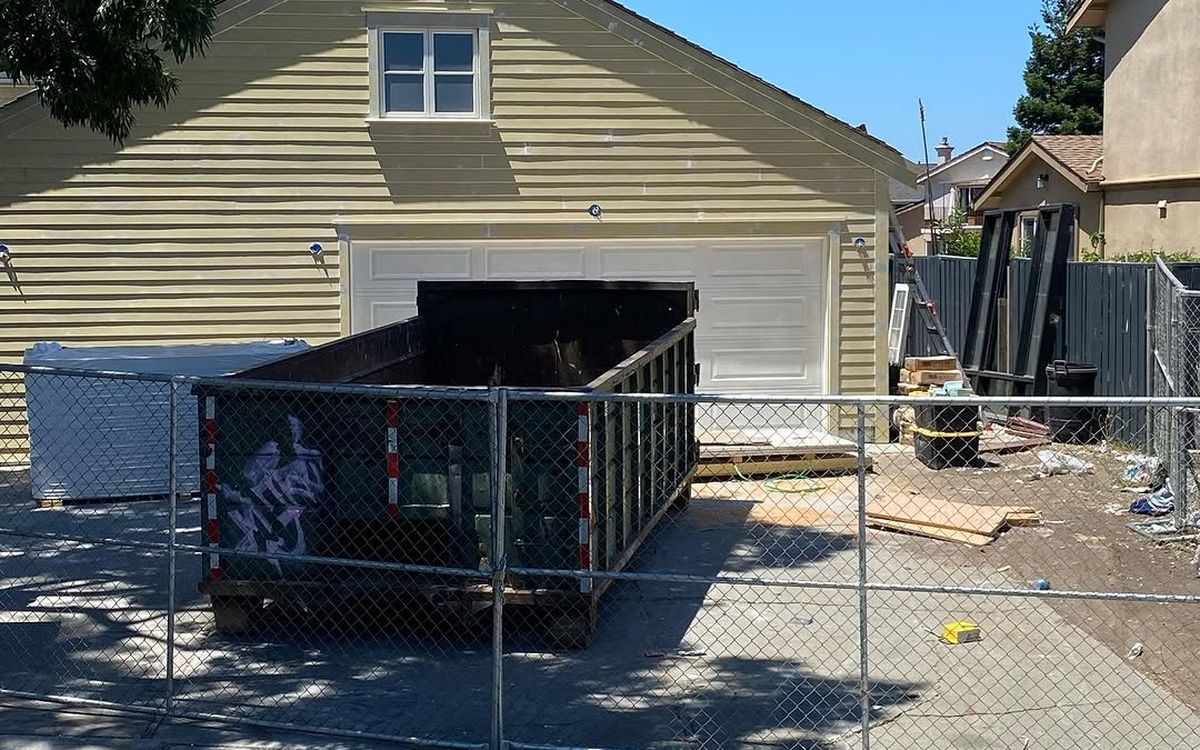
Demolition Permits in the East Bay: What to Settle Before the Machine Arrives
A teardown rarely stalls because of the machine. It stalls because a utility disconnect was requested three weeks too late. Here is the sequence that works.
Read the article
Partial or Full Pool Removal: How to Choose Without Regretting It
Partial removal costs less and is often the right call. It also permanently changes what you can build there. The choice deserves ten minutes of thought.
Read the article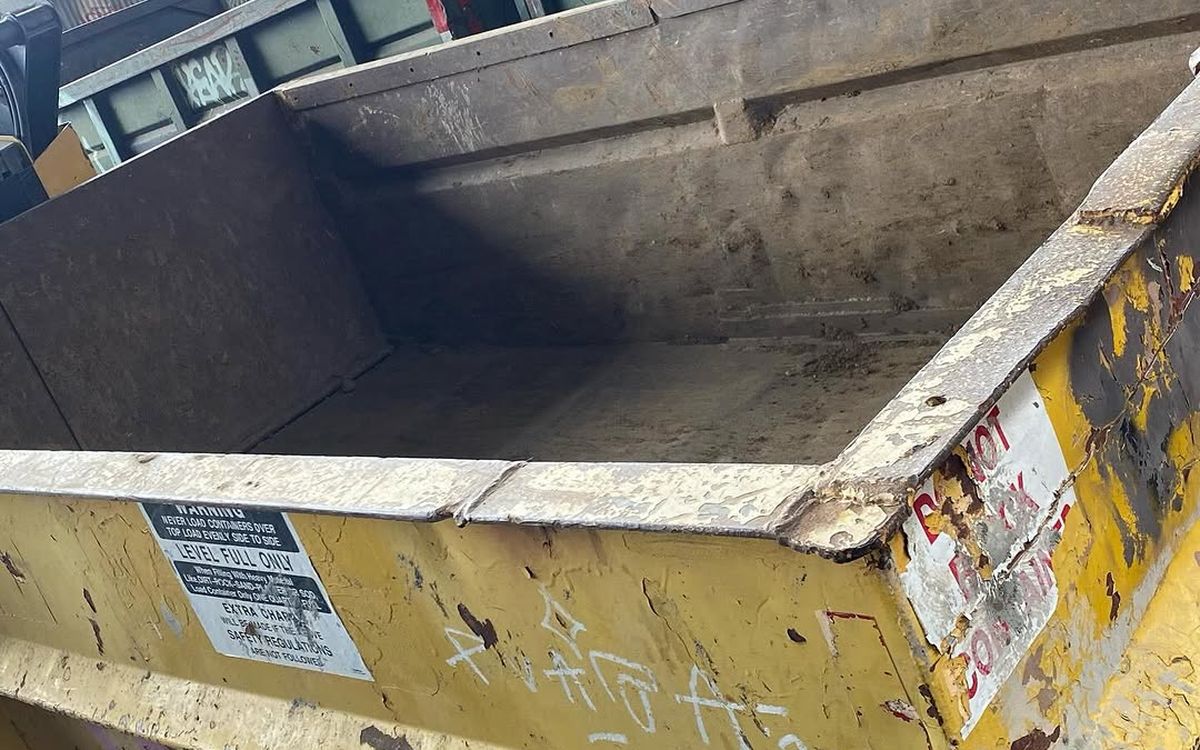
Picking a Dumpster Size That Does Not Come Back to Bite You
The mistake is not ordering a container that is too small. It is ordering one that is too big for concrete and hitting the weight limit half full.
Read the articleNext step
Have a project this article applies to?
We will look at it in person, tell you what the situation actually needs, and put a fixed number in writing.